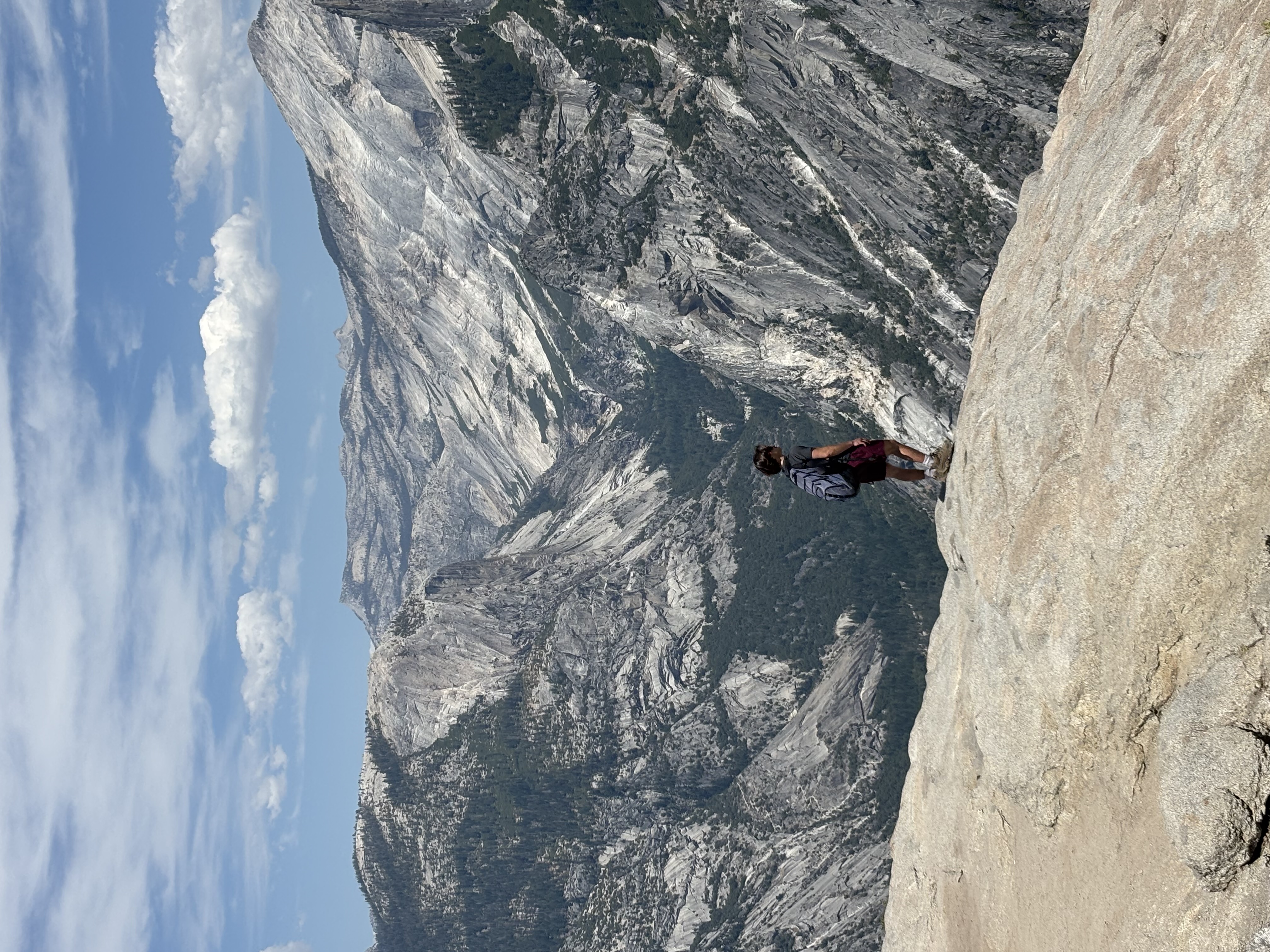
Alex overlooking Yosemite Valley from a sunlit granite ledge

Alex Nania

Stanford Mechanical Engineering

About Me

I'm a mechanical engineering junior at Stanford focused on thermal-fluid systems, and I'm looking for a thermal design internship for summer 2027.

What interests me is the gap between a simulation and a rig — running the CFD, then building the instrumented hardware that tells you whether the model was right. That's most of what I spend my time on, and it's what's below.

Outside the lab/office, I like to spend my time drawing, painting, solving puzzles, reading, lifting weights, thrift shopping, hiking, swimming, exploring, traveling, and experiencing everything this beautiful world has to offer.

Reach out anytime!

Selected Work

Projects

01 / Thermal Systems

Liquid-Cooled Cold Plate Characterization

150 W heater / 8× flow range

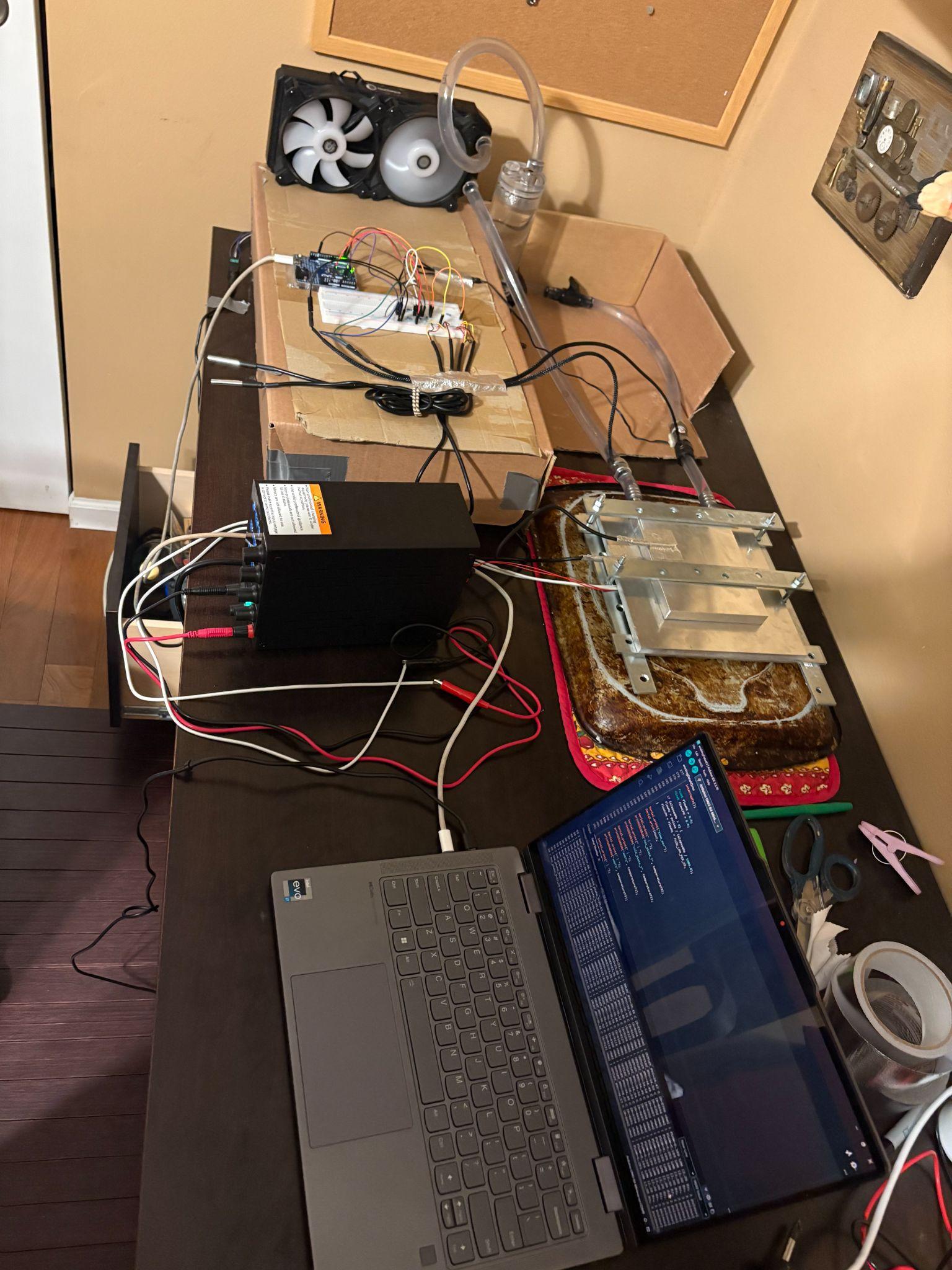
I built and instrumented a liquid-cooling test rig with Arduino data acquisition, NTC and DS18B20 thermistors, a reed-switch flow meter, and a 150 W heater. I used it to characterize an aluminum cold plate with eight 7 mm bores fed by two crosswise manifolds across an eightfold range of coolant flow.

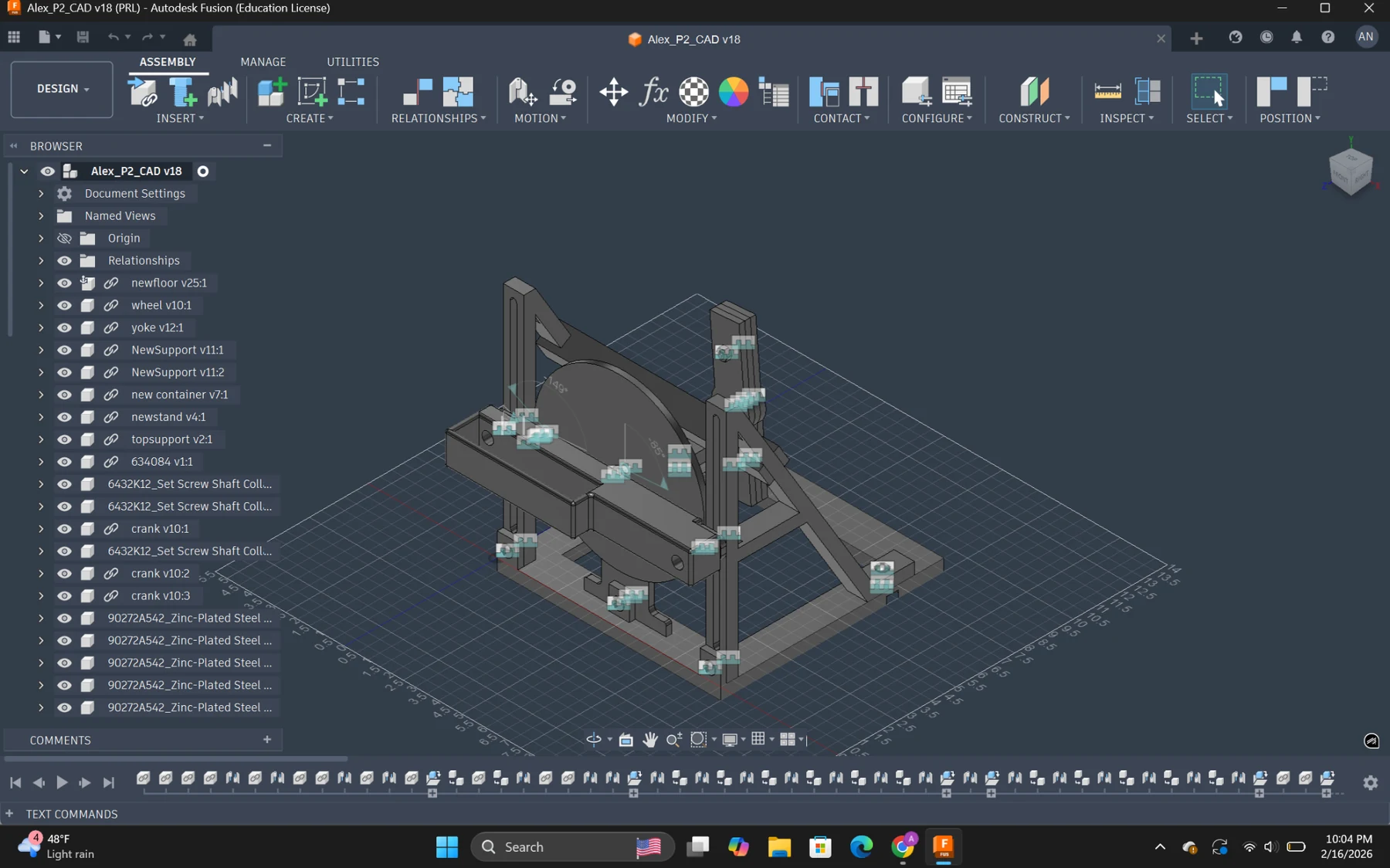
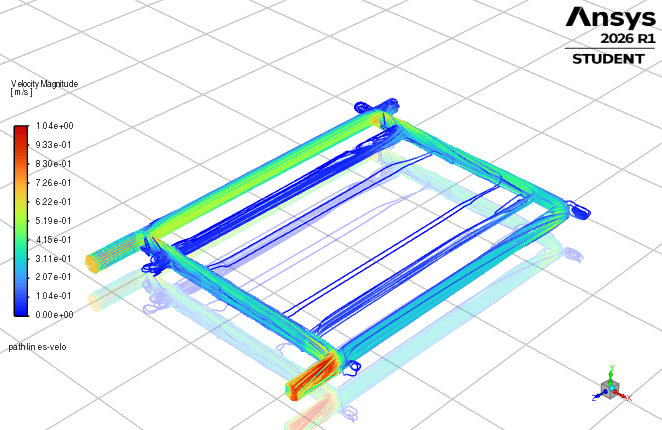
An impossible negative coolant temperature rise led me to a one-point thermistor calibration error. A swept, high-flow cooldown calibration cut run-to-run scatter in coolant-side heat from 69% to 3%. Conjugate CFD then revealed severe flow maldistribution: one bore carried half the coolant, shifting the measured Nusselt exponent from 0.87 to 0.66 after correcting for the real flow split and identifying the manifolds as the redesign target.
02 / Computational Fluid Dynamics

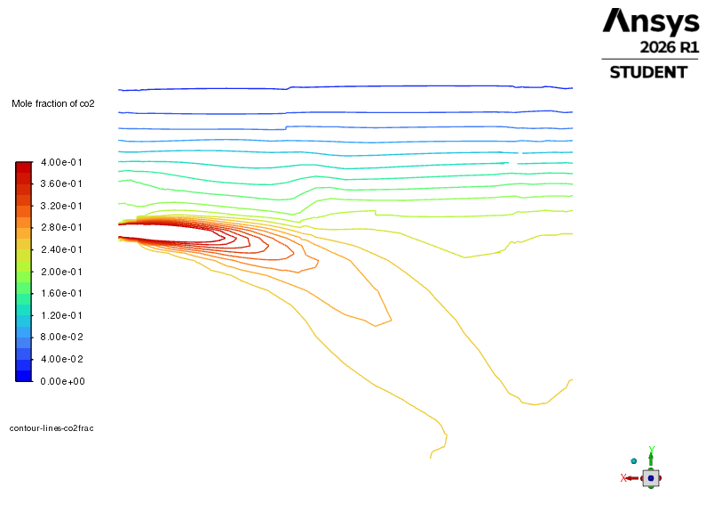
Ansys CO₂ mole-fraction contours showing the inlet jet and vertical concentration stratification inside the enclosure

CFD Validation of Indoor CO₂ Dispersion

I replicated Gilham et al.’s (1997) enclosed-space CO₂ dispersion study using transient CFD and validated the results against the published experimental data. I developed a locally refined, 16,197-cell mesh and compared standard k–ε and k–ω SST turbulence models using concentration histories at four sensor heights. The simulations captured CO₂ accumulation near the floor and vertical stratification, while revealing differences in predicted mixing between the models. This project combined mesh development, species transport modelling, and experimental validation to assess CFD predictions of indoor gas dispersion.

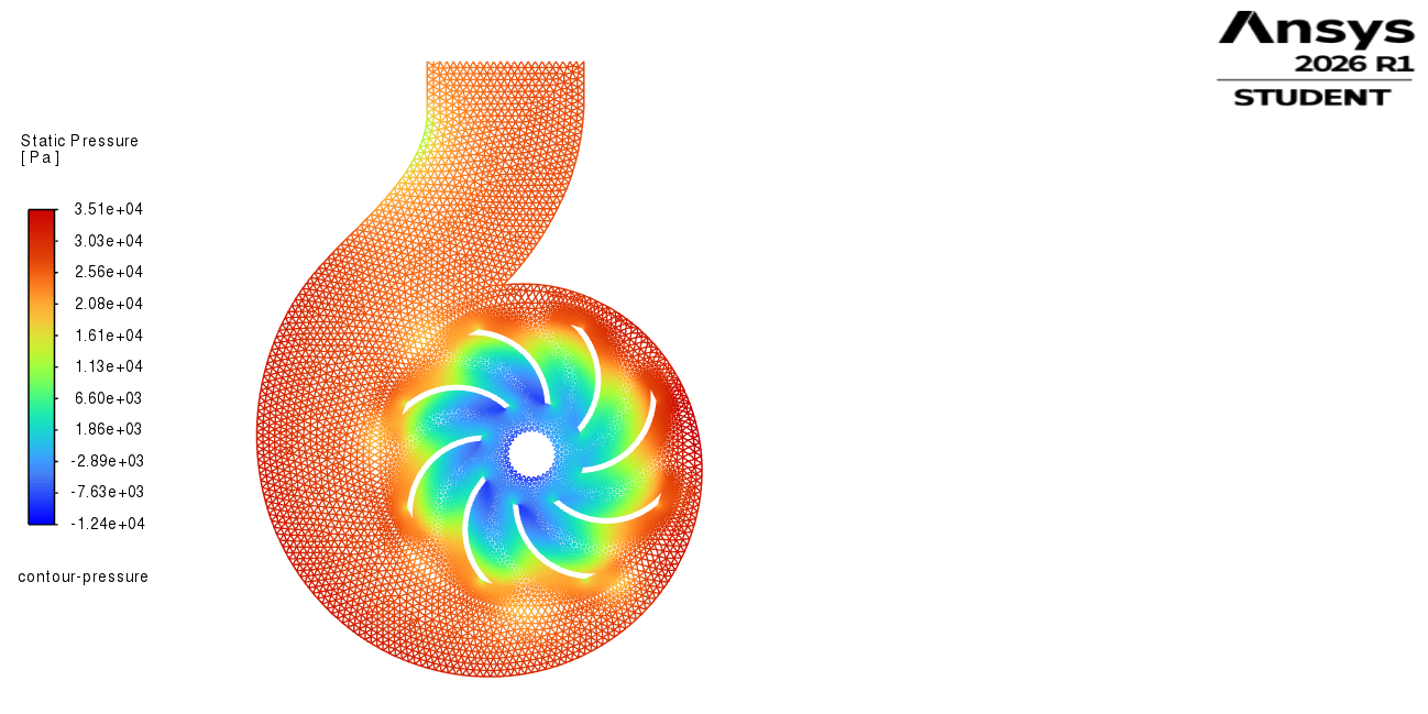
Ansys Fluent static-pressure contour and mesh for a two-dimensional centrifugal pump impeller

Centrifugal Pump

2D MRF Frozen Rotor + RPM Sweep

Modeled a 2D impeller with rotating and stationary regions in an 80,725-cell mesh. At 1,000 RPM, the model produced a 31.9 kPa pressure rise, 9.57 N·m blade torque, and 85.9% hydraulic efficiency. Re-running the sweep at dynamically similar flow recovered the affinity laws: pressure scaled with N², shaft power with N³, and efficiency stayed between 85% and 92% from 500 to 1,600 RPM.

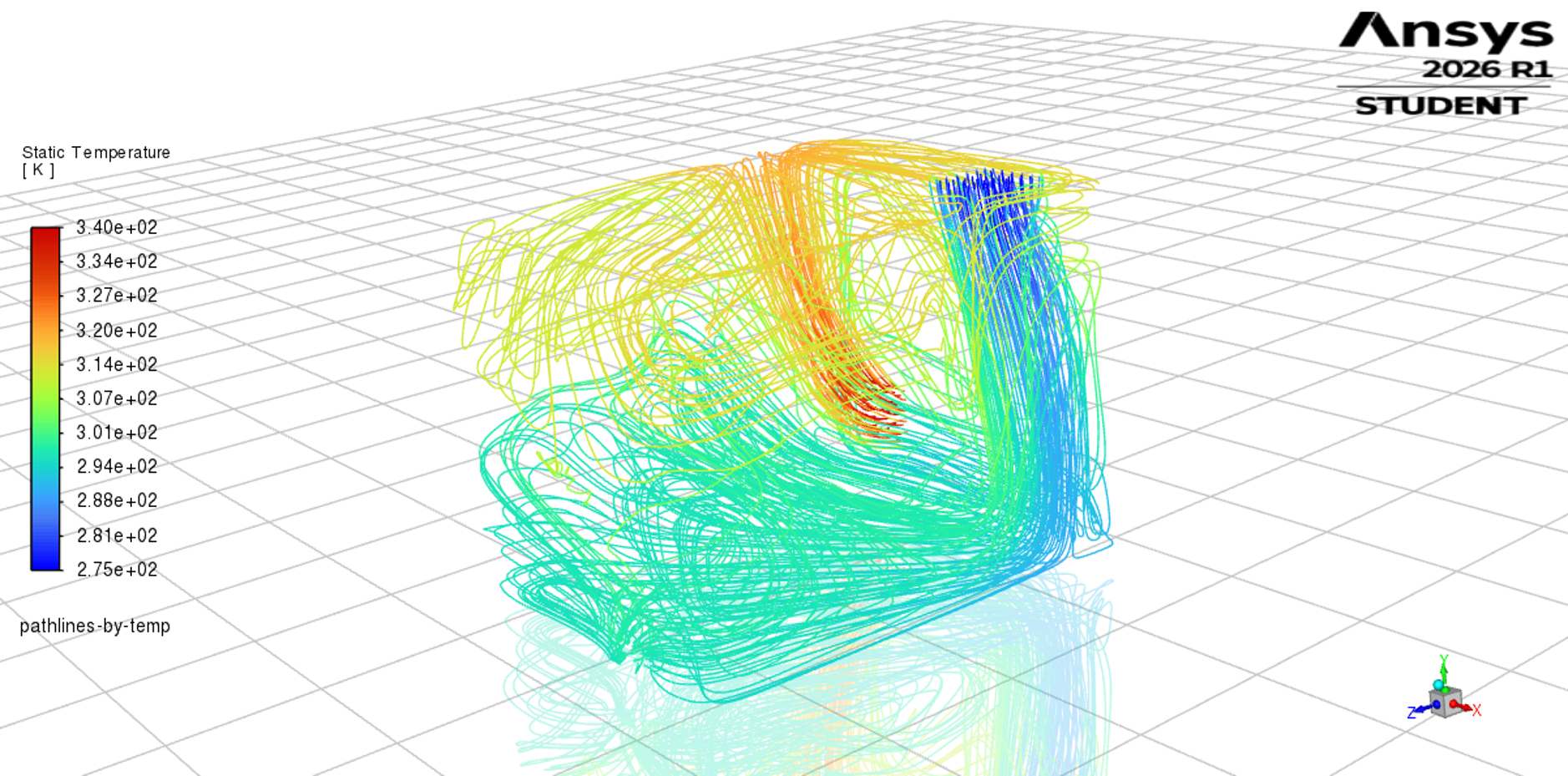
Ansys Fluent temperature pathlines showing buoyant mixing of warm humid air and cold dry air

Humid Air Mixing

Species Transport + Buoyancy

Coupled species transport, incompressible ideal-gas density, and gravity for equal-speed streams of cold dry air and warm humid air. The staged solution closed the water-species and overall mass balances, predicting a mixed outlet at 31.6 °C and 27.1% relative humidity for a ventilation-relevant view of psychrometric mixing and stratification.

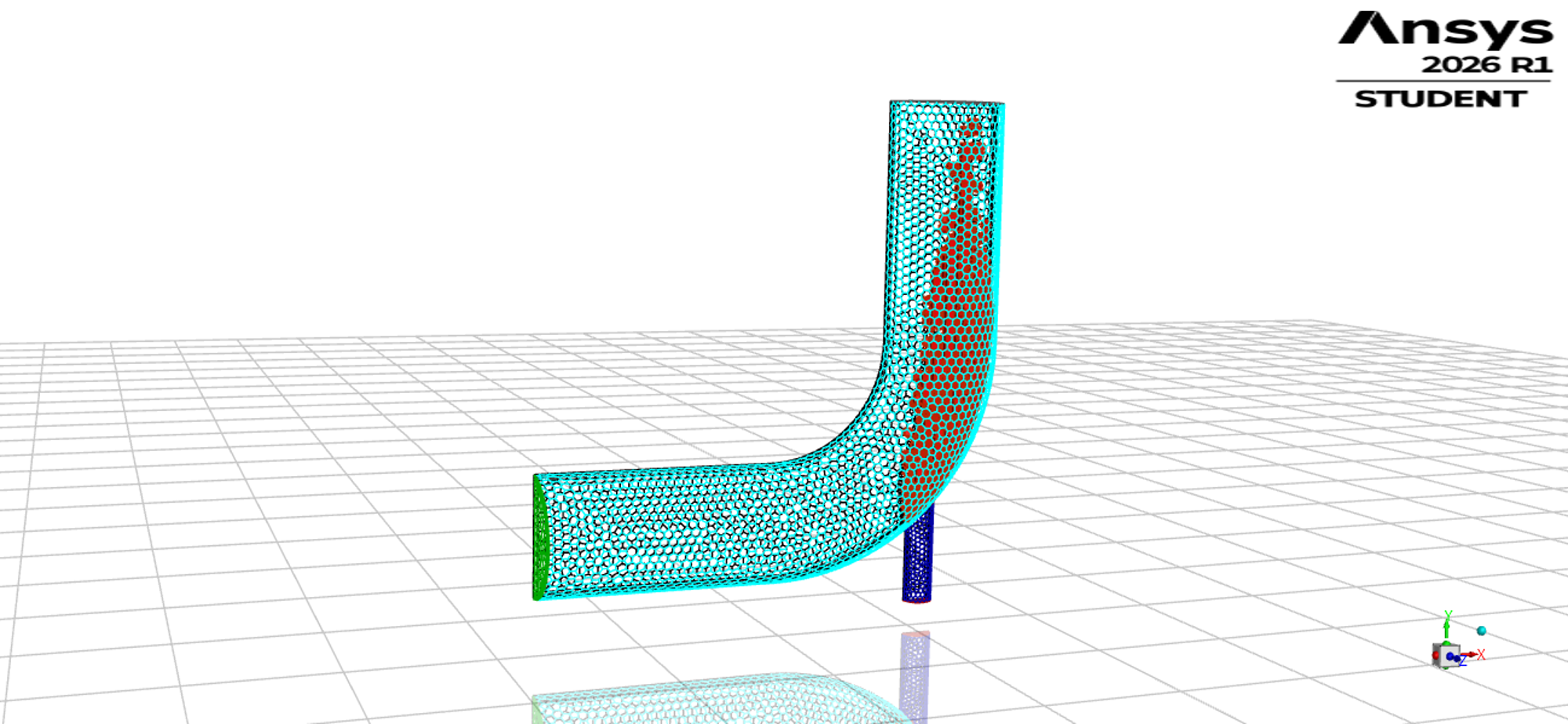
Ansys Fluent adaptive mesh on a hot-and-cold water mixing elbow

Mixing Elbow

Mesh Independence + Discretization

Built a poly-hexcore model of conjugate hot-and-cold water mixing with k-ω SST and second-order upwind discretization. An eight-case adaptive refinement sweep made outlet temperature and heat transfer mesh-independent, while a matched first-versus-second-order study exposed the hot-inlet transition as the right target for local sizing.

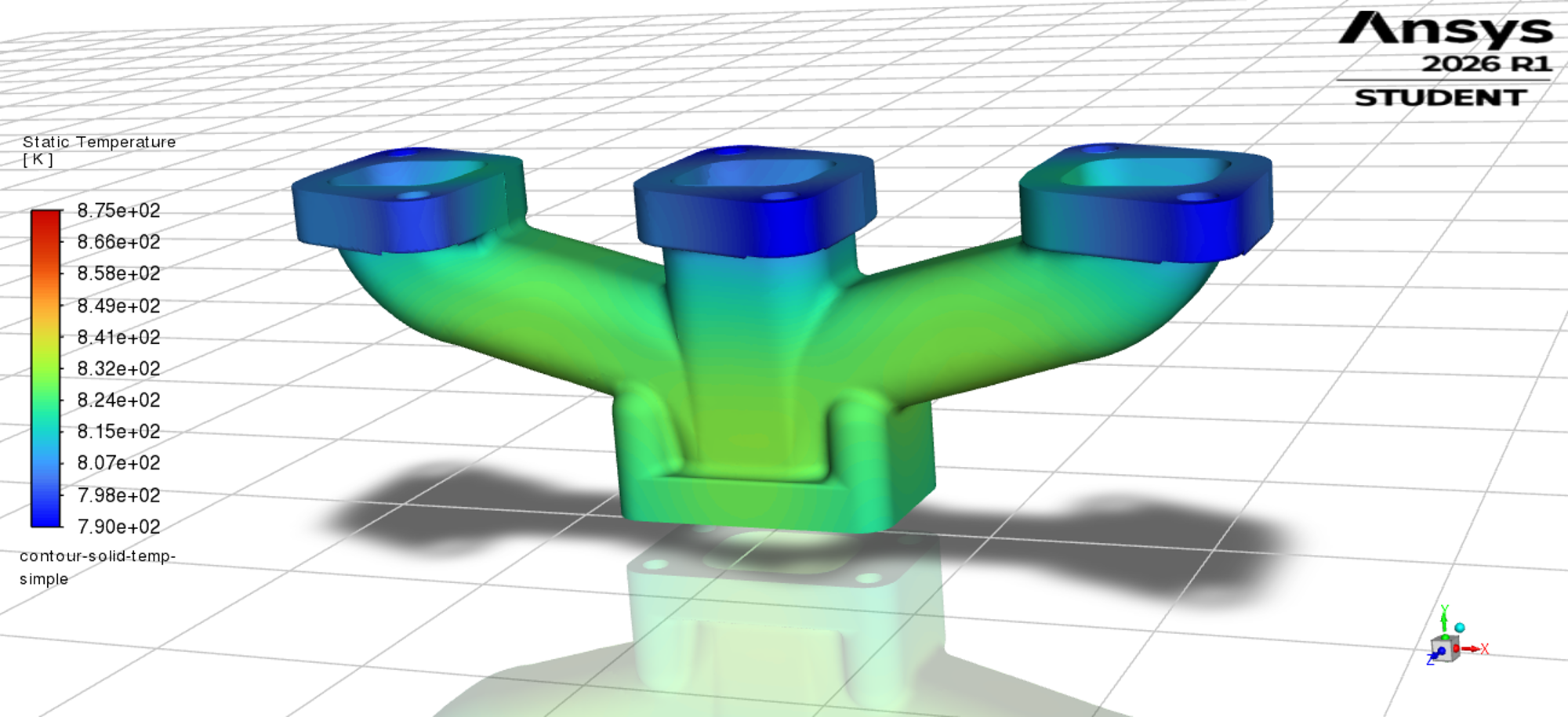
Ansys Fluent temperature contour on a cast-iron exhaust manifold

Exhaust Manifold

Conjugate Heat Transfer

Simulated a cast-iron manifold with roughly 275,000 polyhedral cells, three 925 K inlets, and external convection to a 300 K ambient. Mass and energy balances closed to machine precision, with a 917.5 K outlet and 32.2 m/s outlet velocity. A second SIMPLE solution matched the outlet temperature to 917.533 K, demonstrating solver-scheme independence.

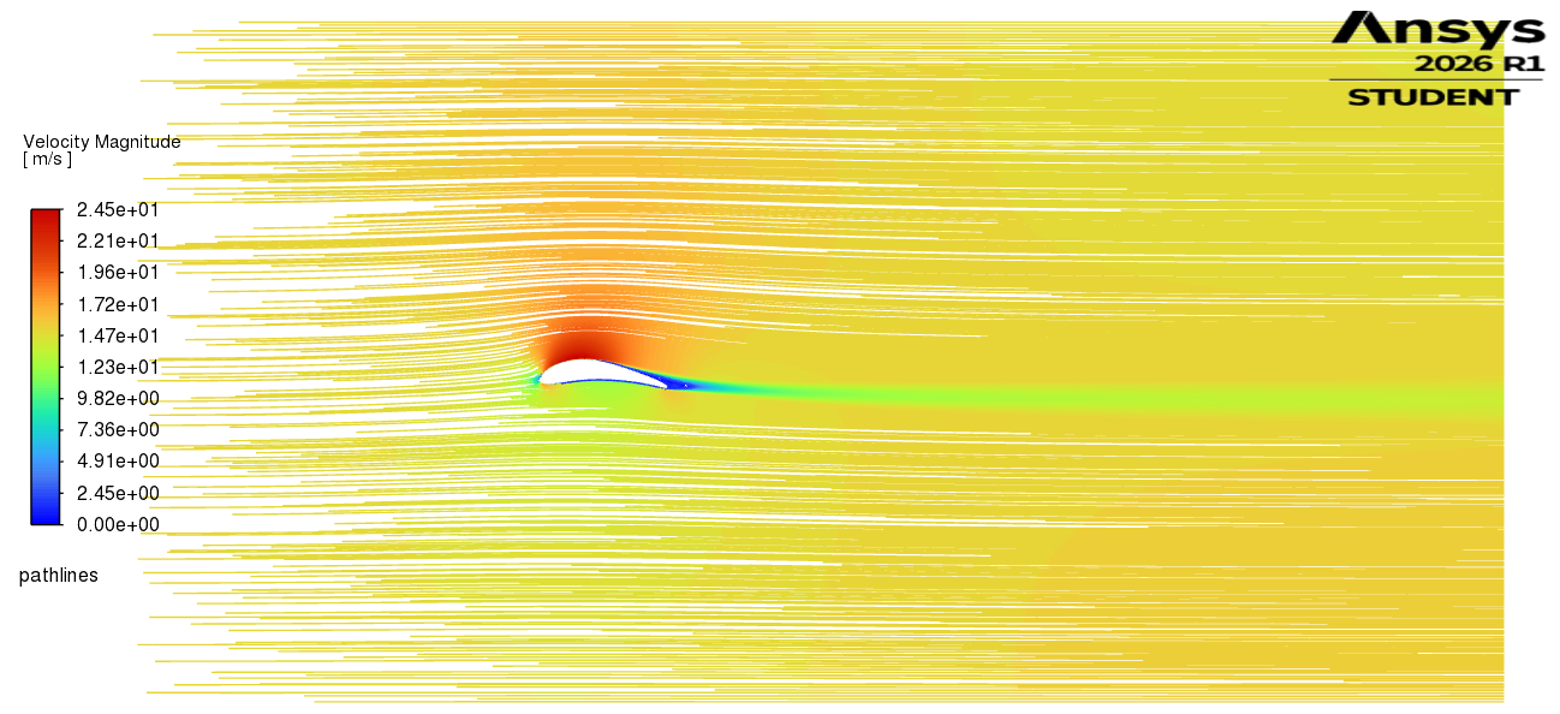
Ansys Fluent velocity pathlines around a two-dimensional fan-blade airfoil section

2D Airfoil

Fan Blade Section + AoA Sweep

Modeled a fan-blade cross-section at 15 m/s with local airfoil and wake refinement. A staged first- to second-order solution reduced net mass imbalance from 4.9×10⁻⁶ to 6.9×10⁻⁸ kg/s. I extended the model into an angle-of-attack sweep, applying a −2.3° inlet correction to zero the geometric angle and resolving lift and drag coefficients.

03–04 / Design + Prototyping

03 / Product Design

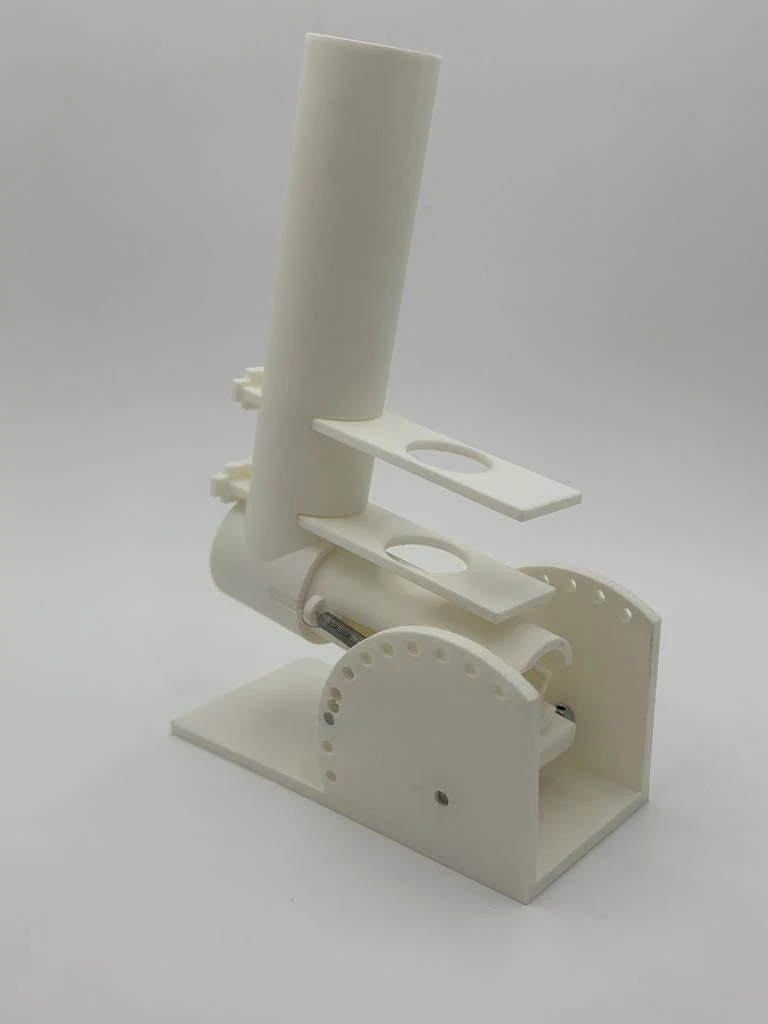
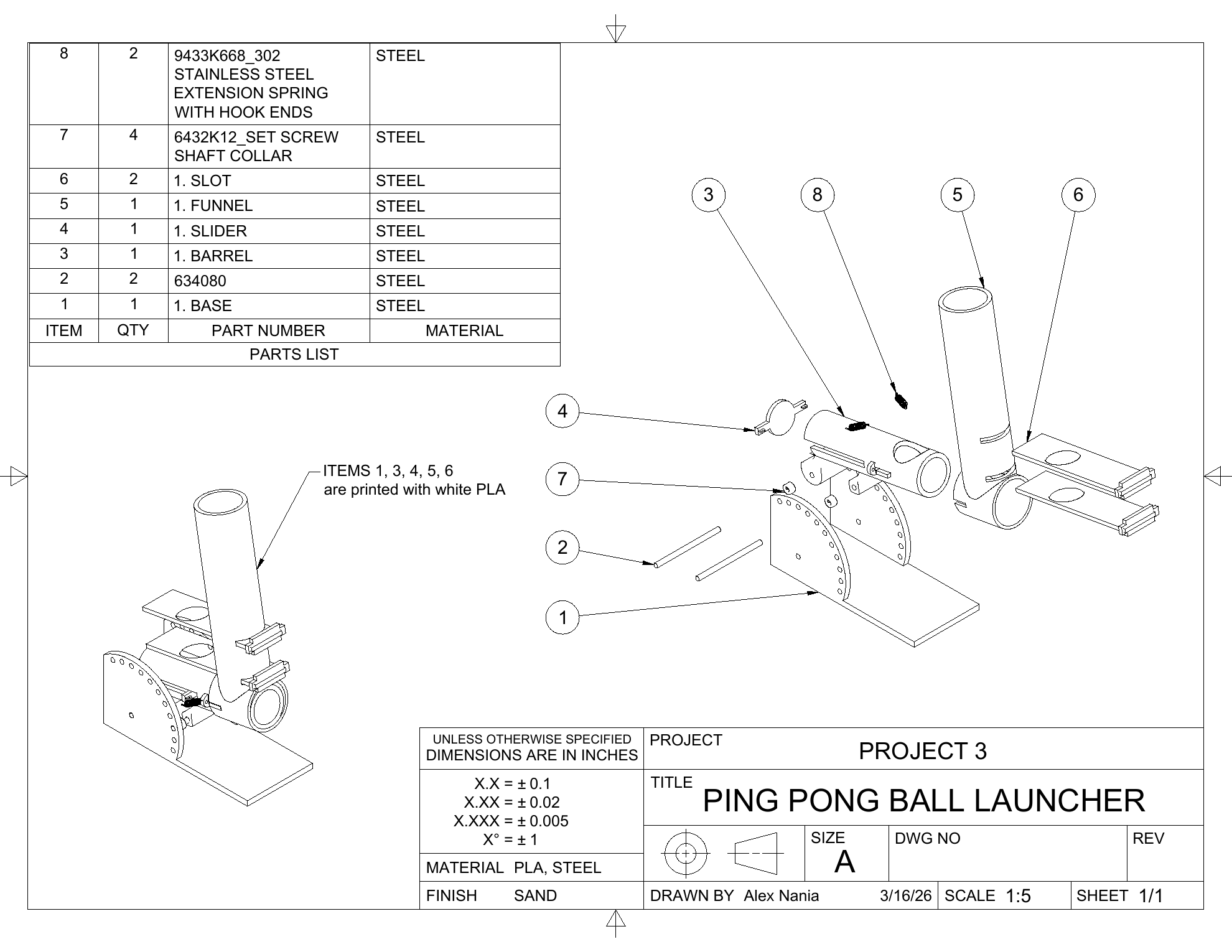
Ping Pong Ball Cannon

Sketch / Prototype / CAD / PLA

I designed and built a spring-powered launcher with a 3D-printed barrel, funnel loading system, adjustable base, and extension-spring-driven slider. Hand sketches and a cardboard mock-up became an iterated CAD assembly focused on rigidity and repeatable shots.

Static analysis sized the holding weight and support reactions, driving a geometry change from a 36.6-degree guided roll to an 8.7-degree direct hit. The revised design raised the minimum required holding weight from 3.81 lb to 6.67 lb.

04 / Mechanism Design

Scotch-Yoke Platform Elevator

2.5 lb lifted / 6 in travel

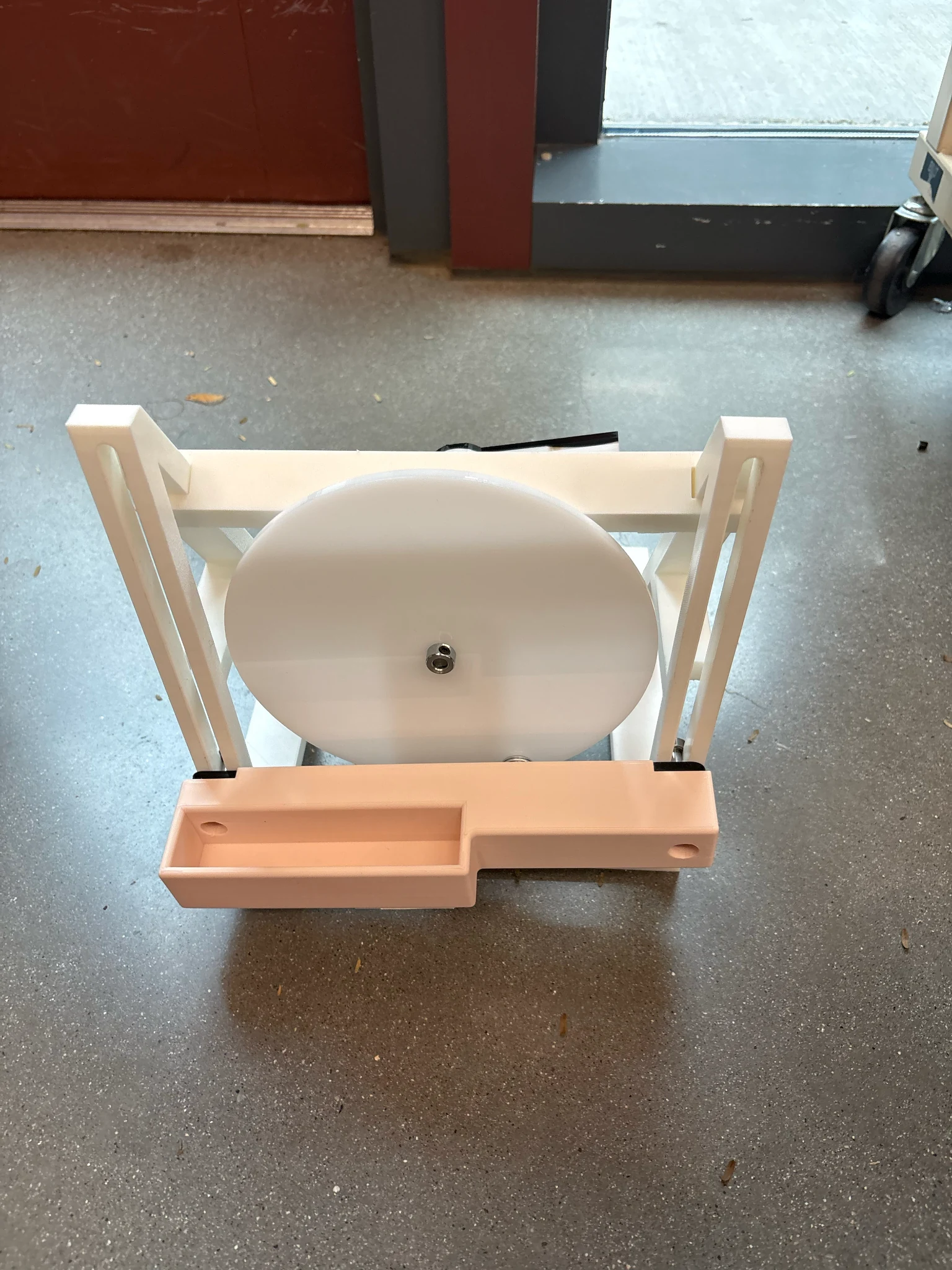
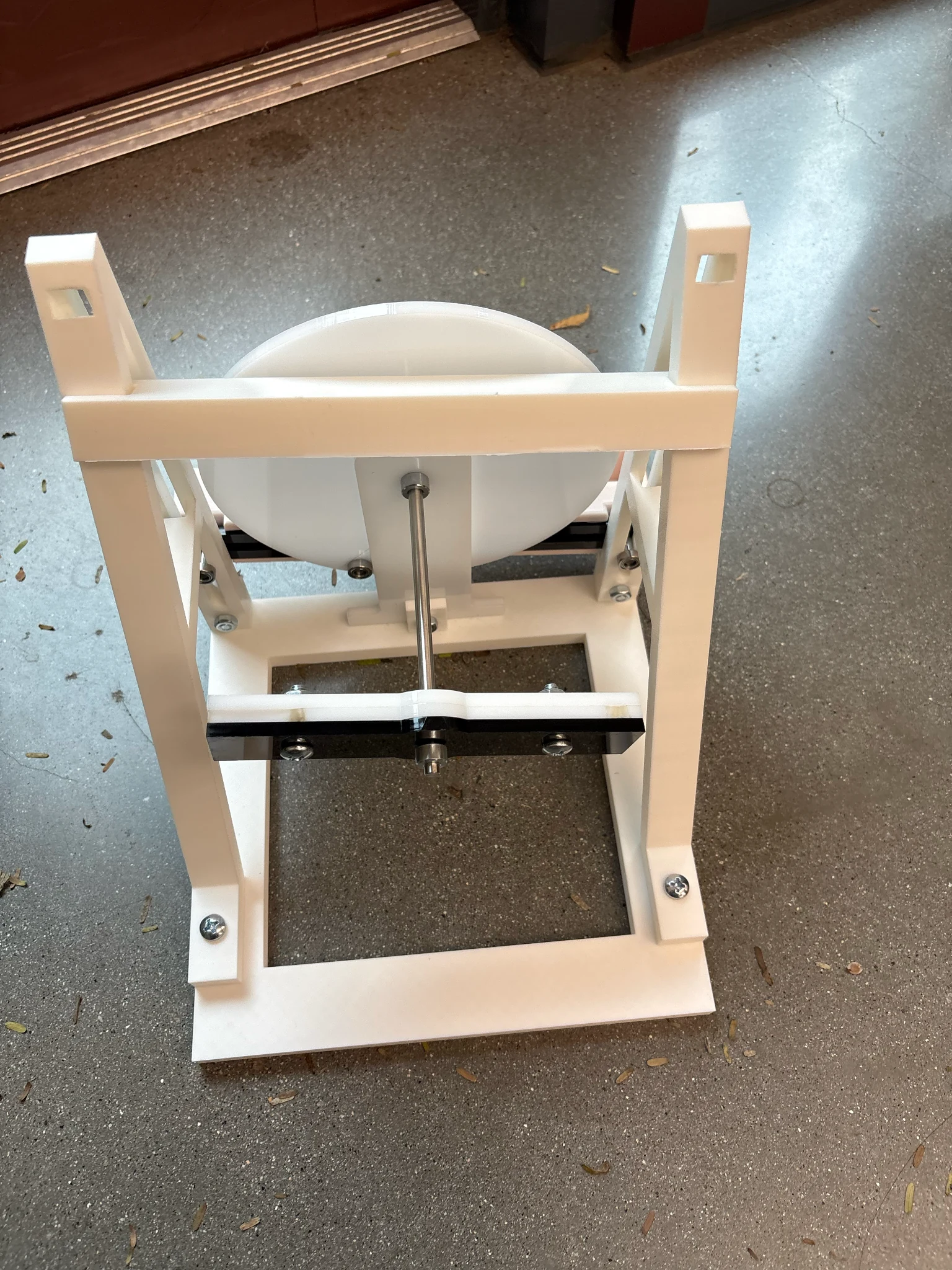
I built a hand-cranked lifting machine that converts rotation into vertical motion through a Scotch yoke. Cardboard, laser-cut acrylic, and 3D-printed PLA prototypes exposed friction and rigidity as the dominant design constraints.

The final version pairs a thicker printed base and guides with a friction-fit top support, offset weight carriage, ball bearings, and a bolted three-layer acrylic handle. It successfully lifts 2.5 lb through the full six-inch travel.

05 / Computational Engineering

Dynamic GPU Cooling Control

Direct-to-Chip Thermal Simulation

Developed a three-state lumped-capacitance thermal model under stochastic GPU loads with an 85 C junction constraint and cubic pump and fan power scaling. Predictive pump and fan co-control reduced modeled cooling energy about 44% against matched baselines, with flow-dependent cold-plate resistance and SVD-based identifiability analysis.

View on GitHub

Signal Coding

Image Compression + Digital Communication

Built a JPEG-style image codec from primitives using Huffman coding, 2-D DCT, quantization, and chroma subsampling, plus an acoustic modem with on-off keying, bandpass filtering, and Viterbi decoding. Performance came within 1% of the Shannon entropy bound and remained error-free to 700 bit/s.

View on GitHub